

When it comes to treating skin cancer, precision matters. So does preservation – of both healthy tissue and peace of mind. That’s why Mohs micrographic surgery has become one of the most trusted and effective treatments for certain types of skin cancer.
At The Skin Associates, we are proud to be recognised as a centre of excellence in skin cancer diagnosis and treatment, with a specialist focus on Mohs surgery. Led by internationally trained consultant dermatologists and Mohs surgeons, we combine surgical precision with deeply personalised care to deliver the best possible outcomes both medically – by expertly removing the skin cancer – and cosmetically by supporting smooth, natural healing with minimal scarring.
Whether you’ve been referred for Mohs surgery or are simply looking to understand your options, here’s what you need to know.
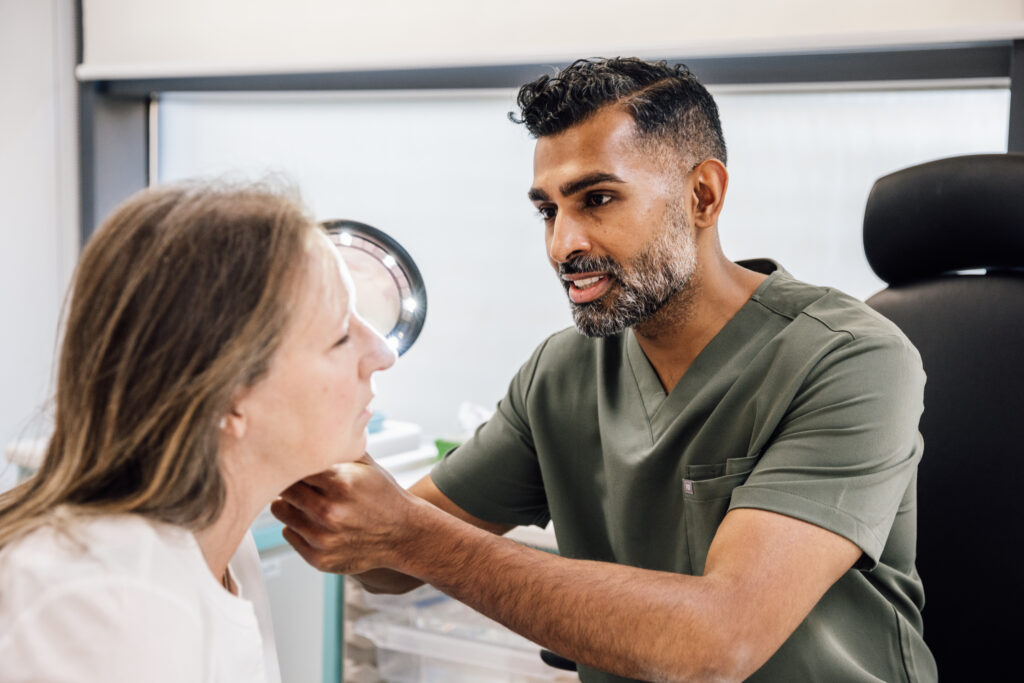
What is Mohs surgery?
Mohs micrographic surgery is a specialised technique used to treat certain types of non-melanoma skin cancers, most commonly basal cell carcinoma (BCC) and squamous cell carcinoma (SCC).
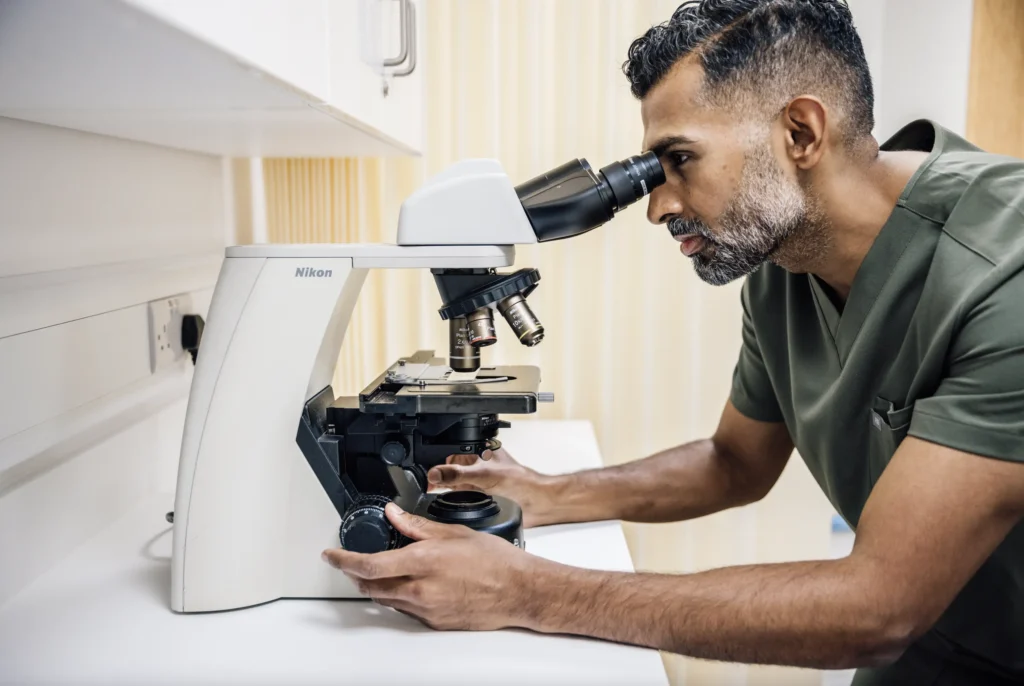
What makes Mohs surgery unique is its accuracy. Unlike traditional surgery, where tissue is removed and analysed later, Mohs surgery involves examining each layer of tissue under a microscope during the procedure itself. This allows the surgeon to remove all cancerous cells while preserving as much healthy skin as possible.
The result?
- Highest cure rates (up to 99% for some cancers)
- Minimal tissue loss
- Lower recurrence rates
- Better cosmetic outcomes, particularly for facial or delicate areas
Who is Mohs surgery for?
Mohs surgery is typically recommended for:
- Skin cancers located on the face, ears, lips, nose, eyelids or hands
- Tumours that are large, aggressive or recurrent
- Cancers with unclear borders or located in areas where preserving tissue is critical
- Patients with a history of multiple skin cancers
If you’ve been diagnosed with a skin cancer and have been told that Mohs may be appropriate, it’s because the priority is to ensure complete removal while maintaining function and appearance.
What to expect during the procedure
Mohs surgery is performed under local anaesthetic as an outpatient procedure. It’s meticulous but not painful, and you’ll be awake throughout.
The process involves:
- Careful removal of the cancerous lesion and a small margin of surrounding tissue
- Immediate microscopic examination of the tissue
- If cancer cells remain, the surgeon removes another layer only where needed
- This is repeated until all cancerous cells are gone
The entire procedure is typically completed within a few hours. In most cases, our surgeons will close the wound the same day, using advanced reconstructive techniques if needed.
Why choose The Skin Associates?
At The Skin Associates, Mohs surgery is carried out exclusively by highly trained consultant dermatologists and surgeons with extensive experience in both medical and cosmetic dermatology.
Our team includes:
- Dr Rakesh Anand, a leading Mohs surgeon and skin cancer specialist who trained at the renowned St John’s Institute of Dermatology and also leads a multidisciplinary skin cancer team at Guy’s and St Thomas’ Hospital.
- Dr Clare Kiely, an expert in complex Mohs cases, performing over 500 procedures annually. Also trained at St John’s Institute of Dermatology, she brings deep procedural experience and a meticulous approach to both cancer clearance and aesthetic outcome.
- Dr Richard Barlow, a global pioneer in dermatologic surgery whose career has helped shape how Mohs and laser surgery are practised today.
Together, our consultants bring a rare blend of technical precision, surgical expertise and aesthetic sensitivity, all delivered with the compassion and discretion that defines our practice.
Before and after surgery: comprehensive skin cancer care
Mohs surgery is just one part of what we offer. As a dedicated skin cancer centre, we provide:
- Expert mole checks and full-body skin screening
- Diagnosis and management of all skin cancers and pre-cancerous lesions
- Follow-up care and surveillance for high-risk patients
- Surgical excision of moles, cysts and lipomas where needed
- Cryotherapy, biopsies and scar revision procedures
- Cosmetic support including scar treatments and skin health maintenance